


Sibley Birds 2nd Edition
4.384.00 Reviews
App Specs
- Version
- 1.1.15
- Updated On
- License
- $19.99
- Downloads
- 10,000+
- Developer
- mydigitalearth.com
- Categories
- Books & Reference
- Platform
- Android
Screenshots
 Analysis by AppCompare
Bird identification is one of those hobbies where the right reference can make a short walk much more rewarding. I tested Sibley Birds 2nd Edition with that in mind, using it less like a casual encyclopedia and more like a field companion: something to open when a bird appears briefly, when a call comes from dense cover, or when I want to check a visual detail before deciding on an identification. It is a paid Books & Reference app from mydigitalearth.com, aimed at North American birders who want a focused identification tool rather than a general nature app.
The first thing to understand is that this is not a social birding network or a simple quiz. Its purpose is practical reference work. You bring the observation, then use the app to compare the bird’s appearance or call with the material available inside it. That makes it especially appealing to beginners who are ready to move beyond random image searches, while still giving more experienced birders a compact source to consult. My overall impression is positive, but the value depends heavily on how you use it and whether you expect a modern, guided identification service.
Where the real friction appears during a sighting
The most common difficulty is not necessarily finding a bird in the app; it is arriving with an observation that is useful enough to narrow down. A quick glimpse of a small gray bird is rarely sufficient on its own. I had better results when I paused to note the bird’s size, posture, habitat, movement, and the strongest visible markings before opening the reference. Even a rough description such as “sparrow-sized, low in shrubs, pale eyebrow, repeated two-note call” is more useful than relying on memory alone.
This matters because a field guide can show you possibilities, but it cannot turn an uncertain observation into a certain one. When I used the app immediately after seeing a bird, I found it more helpful for comparing likely candidates than for producing a single unquestionable answer. That is a healthy limitation for any identification reference. It encourages you to look again at the evidence instead of accepting the first attractive picture.
Call-based identification brings a different kind of friction. Outdoor sound is messy: wind, traffic, insects, moving water, and other birds can make a familiar call seem unfamiliar. I found it useful to replay the app’s reference sound while thinking about rhythm and tone rather than trying to match one isolated noise. Ask yourself whether the call has the same number of notes, the same pace, and the same overall quality. A bird that looks right but sounds completely wrong deserves another look.
Pictures can also mislead if you compare only color. Lighting changes plumage dramatically, and many North American species share broad color patterns. I paid closer attention to shape, wing bars, eye lines, bill proportions, and the relationship between markings instead of treating one shade as decisive. This is one of the app’s strongest educational uses: it can train your eye to notice structure rather than encouraging a quick color-based guess.
Another sticking point is expecting the application to behave like a camera-recognition service. I would not approach it as a button that guarantees an answer from any photograph. The useful workflow is more deliberate: observe, form a short list, compare the relevant illustrations or sounds, and then verify the choice against location and behavior. For a birder who enjoys that process, this feels rewarding. For someone who wants an automatic answer with no interpretation, it may feel slower than expected.
Worth Reading Before You Choose

EA SPORTS FC Mobile 26 Is a Bigger Football Game, but It Takes Time

Flipboard Shows What News Apps Must Do Beyond the Feed

Switching to Android Auto Means Rethinking Your Driving Routine

Google Calendar Makes a Crowded Week Easier to Manage

Ludo King Makes the Most of the Minutes Between Plans

Baby Panda World Brings Quick Play to Modern Phones, but Its Game Library Feels Busy
What to check before heading outside
Because Sibley Birds 2nd Edition is a paid app, I would prepare it before a planned outing rather than buying it at the trailhead and expecting an instant solution. The price is $19.99, so the sensible approach is to decide whether you want a serious North American reference, not merely a one-time curiosity. I see the purchase as easier to justify for someone who regularly watches birds, travels through different habitats, or wants to learn identification systematically.
The app is listed for devices running Android 5.0 or later, and its current version is 1.1.15. Those details make a quick compatibility check worthwhile, especially if you are using an older phone or tablet. A compatible operating system does not automatically mean the experience will be ideal on every device, though. Screen size, speaker quality, storage space, and battery condition all matter more outdoors than they do at home.
I recommend opening several likely species before a trip and testing the parts you expect to use. Check that illustrations are easy for you to inspect, that sound playback is audible through your device, and that you can move between related birds without fumbling. This small rehearsal reveals more than a store description does. If the interface feels awkward at your kitchen table, it will feel worse when a bird is visible for only a few seconds.
Sound deserves a specific check. Keep the volume comfortable and test the phone’s speaker in a quiet room, but do not assume that a loud setting will solve outdoor noise. In the field, earbuds may make reference calls easier to hear, although they can also reduce awareness of bicycles, vehicles, or other people. I prefer using one ear only when I need audio assistance near a trail, and I keep the other ear open to the environment.
It is also worth creating a personal observation habit before depending on the app. I keep a short mental checklist: approximate size, silhouette, main colors, distinctive marks, behavior, habitat, and call pattern. This takes only a few seconds and prevents the application from becoming a replacement for observation. The more precise your initial notes are, the more efficiently the reference helps.
The Everyone content rating makes the app suitable for general audiences, including families learning together. That does not make it a toy, however. Children may enjoy matching birds to pictures, while adults can use the same material for more careful study. I found it works best when a parent or teacher asks why a bird fits a description instead of simply announcing the name.
Recovering when an identification attempt goes wrong
When I reached the wrong conclusion, restarting from the beginning was usually less useful than isolating the uncertain detail. If the shape seemed right but the call did not, I revisited the sound instead of discarding the entire observation. If the call matched but the bird’s size felt wrong, I checked whether distance or posture had distorted my estimate. This kind of recovery turns an error into a short lesson.
A practical method is to keep two or three candidates in mind rather than committing immediately. Compare them by one feature at a time: bill shape, eye marking, wing pattern, tail movement, or vocal rhythm. The app becomes much more effective when you use it to eliminate alternatives. That is a less obvious advantage of a detailed reference: it supports reasoning, not just recognition.
I also found that returning to the same observation later can improve accuracy. At home, with less pressure, I could remember the scene more clearly and compare the likely species carefully. If you make notes or take a photograph, use them as evidence rather than as an automatic answer. A blurry image can preserve posture or habitat even when it cannot reveal a small marking.
When the app appears slow or unresponsive, I would first use ordinary checks rather than assuming the reference itself is broken. Close other demanding applications, make sure the phone has enough available space, restart the device, and confirm that the operating system meets the minimum requirement. If sound is involved, check the media volume rather than only the ringtone setting, and test with another audio source to separate a device issue from an app issue.
Battery management is another overlooked part of field use. A bright screen, repeated sound playback, camera use, and weak signal searching can drain a phone quickly. I keep the display brightness reasonable and avoid leaving the app open while walking between locations. This is not a criticism unique to this reference; it is a practical way to make any phone-based field guide last through a longer outing.
When the application is not the cause
Identification failures often come from context rather than software. Seasonal plumage, immature birds, females that look different from males, hybrids, and regional variation can all complicate a comparison. Even a strong reference cannot remove those biological differences. If the bird does not fit perfectly, treat that mismatch as a reason to investigate further, not as proof that the app is inaccurate.
Location is equally important. A species may look like the right match but be unlikely in the place or habitat where you saw it. I use geography as a filter after examining the bird’s physical traits, not as the only deciding factor. An unusual sighting can happen, but it should require stronger visual or audio evidence than a routine local bird.
Weather and acoustics can create false confidence. Wind can stretch a call, echoes can make one bird sound like several, and rain can hide quieter notes. In those conditions, I give more weight to repeated observations than to one hurried sound. If the bird remains unidentified, that is not a wasted session; noting what you could not determine gives you a specific skill to practice next time.
Network expectations can also cause confusion. I would not plan a trip around the assumption that every part of a reference app works like a live online service. Before leaving, test the exact material you expect to consult and avoid depending on an internet connection at a remote location. This is a general preparation rule, but it is particularly important for a paid field reference because its usefulness is greatest when it is ready before the sighting happens.
There is also a difference between this app and broader alternatives. A free web search may be better when you want current community discussion, recent sightings, or several opinions about an unusual bird. A social birding platform may be preferable if recording observations and sharing them with other people is your main goal. An automated camera-identification tool can be faster for a clear, close photograph. Sibley Birds 2nd Edition makes more sense when you want a dedicated North American reference and are willing to compare evidence yourself.
Who will get the most from the purchase
I would recommend it to a learner who has started recognizing common birds but still struggles with similar species. It is also a good fit for someone who wants to study calls alongside appearance instead of treating birding as a picture-matching exercise. Families, students, and casual naturalists can use it together, provided they are comfortable with a reference-led process rather than a fully automatic one.
Experienced birders may appreciate having a familiar source in a portable format, particularly when they want a focused reference instead of a crowded general-purpose app. The rating of 4.3 from around 184 ratings suggests that many users find the experience worthwhile, while the install count of over 10K indicates a smaller, more specialized audience than mass-market identification tools. I read that as a sign of a focused product, not a reason to expect every modern convenience.
I would skip it if your priority is free access, social recording, or instant photo recognition. The cost is difficult to justify for someone who only occasionally wonders about a bird in the garden. I would also hesitate if you prefer highly guided interfaces that ask a series of questions and produce one answer. This app rewards patience and comparison, so its learning curve is part of the experience rather than something it completely removes.
For an everyday example, imagine hearing a repeated call during a morning walk but seeing only a quick silhouette in a hedge. I would first note the rhythm, then estimate size and movement, and only afterward use the app to compare the likely birds. If two candidates remain, I would replay their calls, inspect the relevant markings, and return to the hedge if the bird calls again. That workflow is slower than snapping a photograph into an automated service, but it teaches you what to listen and look for next time.
One useful habit is to use the app after, not only during, a walk. At home, choose one bird you saw and study the features that separated it from its closest lookalikes. Then, on the next outing, deliberately search for those features. This turns a reference purchase into a learning routine. It also reduces pressure in the field, because you are not trying to master every species in one afternoon.
My practical verdict
After using it as a field reference, I see Sibley Birds 2nd Edition as a specialized tool for people who want to identify North American birds through careful comparison of pictures and calls. Its best quality is not the promise of instant certainty; it is the way it supports a more observant process. I found it most valuable when I already had a few clues and needed a focused way to test them.
The main trade-off is clear. You pay $19.99 for a dedicated reference, yet you still need to supply the judgment. That is excellent for learning and less appealing for anyone seeking automation. Setup checks, sensible audio expectations, and a simple observation routine make a noticeable difference. When a result seems wrong, checking habitat, season, sound quality, and device behavior is more productive than immediately blaming the app.
My recommendation is straightforward: choose it if you want a serious, portable birding reference and enjoy learning why an identification fits. Choose a different kind of app if you mainly want community sightings, live discussion, or one-tap photo analysis. With that expectation set correctly, Sibley Birds 2nd Edition feels like a useful companion for building real identification skills rather than a shortcut that replaces them.
The app was released on Nov 16, 2018, and mydigitalearth.com continues to present it as a focused Books & Reference product. Its age and specialized scope are worth considering alongside the current version, but neither changes the central question: do you want a dependable study aid for your own observations? If the answer is yes, it can earn a regular place in your birding routine. If the answer is no, the price and deliberate workflow will probably feel like unnecessary friction.
Pros
- Comprehensive species coverage with detailed identification information.
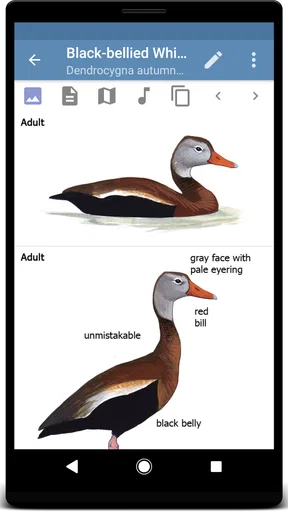
- High-quality bird illustrations make field comparisons easier.
- Includes range maps to support regional bird identification.
- Useful for both beginners and experienced birdwatchers.
- Works as a convenient portable reference during outdoor trips.
Cons
- The large content library may require considerable storage space.
- Some advanced features can take time to learn.
- Limited value for users outside North America.
- Bird identification still depends on careful visual comparison.
- Updates and extra content may require additional purchases.
FAQs for Sibley Birds 2nd Edition
What is Sibley Birds 2nd Edition?
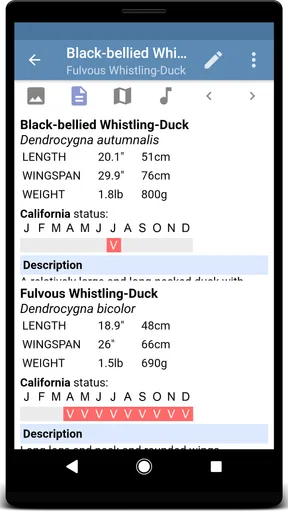
Sibley Birds 2nd Edition is a digital field guide based on The Sibley Guide to Birds, designed to help birdwatchers identify North American birds. It combines detailed illustrations, species descriptions, range maps, songs and calls, and identification notes in one app. It is especially useful for beginners building identification skills as well as experienced birders who want a portable reference.
Does Sibley Birds 2nd Edition work offline?
Yes, one of the app’s most useful features is that its core field-guide content can be accessed without a mobile data connection after the necessary resources have been downloaded. This makes it practical for parks, forests, wetlands, and remote locations. Users should still check available storage and complete downloads before leaving home, since some optional audio or media features may require additional files.
What information does the app provide for each bird species?
Species pages generally include Sibley’s highly detailed artwork, identification descriptions, habitat and range information, seasonal details, and distribution maps. Many entries also provide bird songs and calls, helping users compare visual characteristics with vocal clues. The combination is valuable because bird identification often depends on several details rather than color alone, including shape, behavior, markings, location, and sound.
Is Sibley Birds 2nd Edition suitable for beginners?
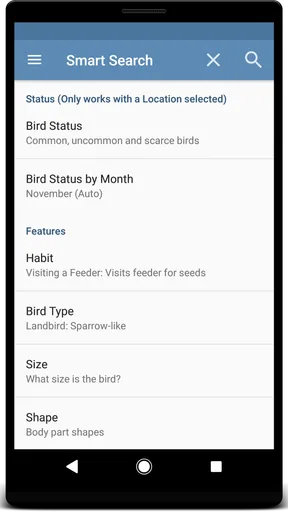
The app is suitable for beginners, although its amount of information may feel extensive at first. Clear illustrations and written comparisons help new birders learn important field marks, while search and browsing tools make it easier to find likely species. Beginners may need some practice understanding range maps, plumage differences, and bird terminology, but the guide becomes increasingly helpful as identification experience grows.
Is Sibley Birds 2nd Edition worth downloading for experienced birdwatchers?
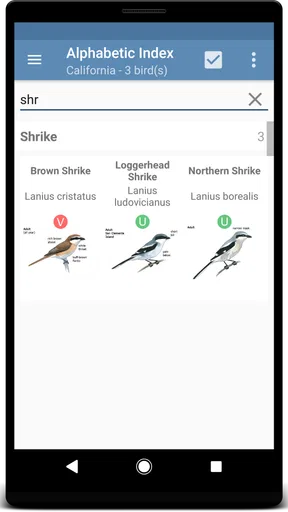
For experienced birdwatchers, the app can be a worthwhile replacement or companion to the printed Sibley guide. Its searchable database, compact format, range maps, illustrations, and bird sounds are convenient when traveling or checking an uncertain identification in the field. However, users who prefer printed books, already own another comprehensive guide, or expect advanced community-reporting features may find its value depends on their personal birding habits.


